
What classical pieces is your Omaha Symphony performing this 2026/27 season?
September 3, 2026
From iconic Beethoven pieces to contemporary gems, there’s something for everyone in our 2026/27 season!Wednesday, September 30
Dr. Michael Emmerich breaks down what is so unique about the St. Cecilia Cathedral Pasi Organ.
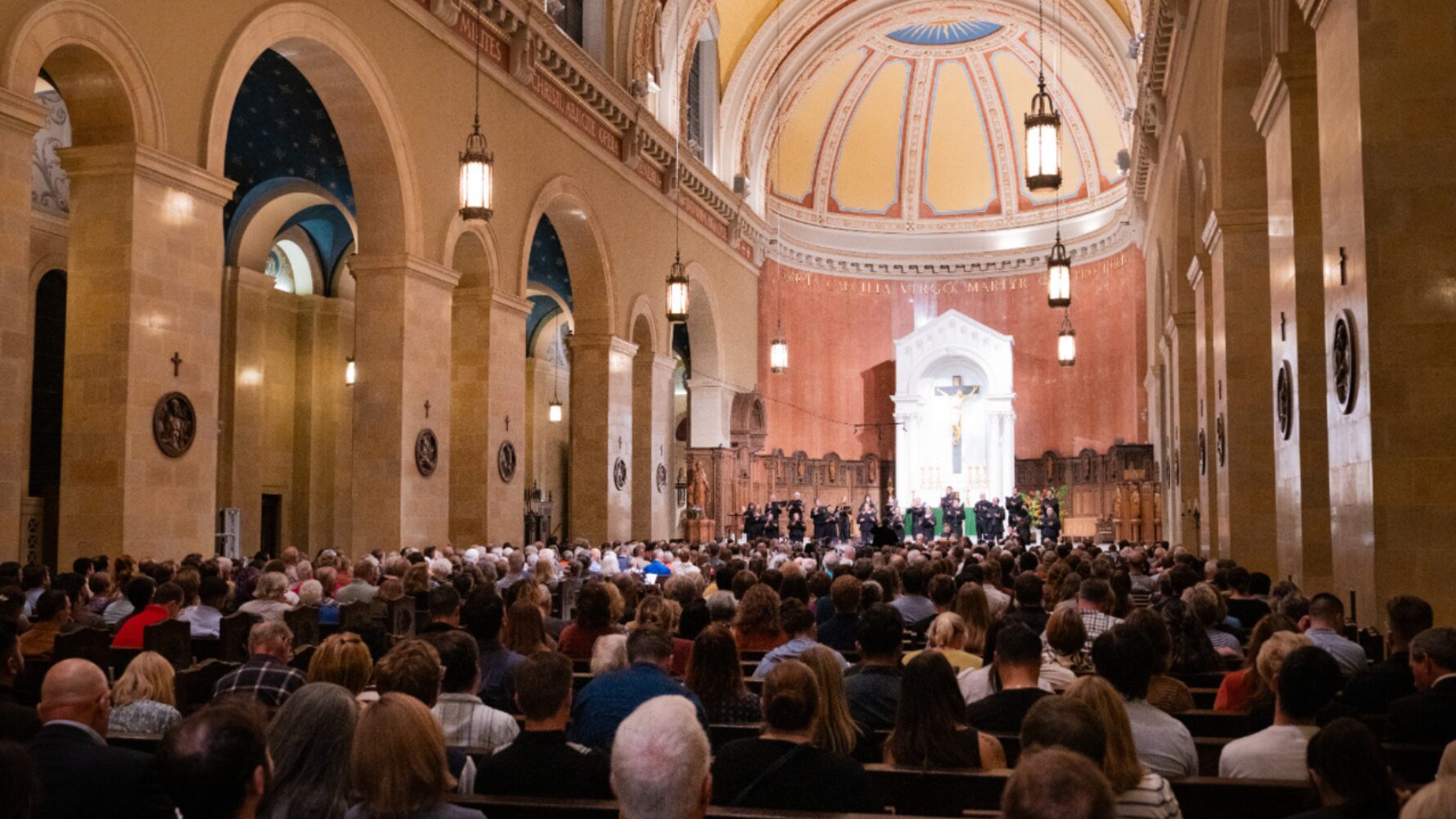
Tucked deep inside the beautiful St. Cecilia Cathedral is an extraordinary instrument with a story and sound as unique as the building itself: the Pasi Organ.
Dr. Michael Emmerich, Director of Worship for the Archdiocese and Music Director at St. Cecilia Cathedral, broke down what makes this instrument particularly remarkable.
Built by Austrian-born organ builder Martin Pasi and installed in the Cathedral in 2003, the Pasi Organ is a mechanical-action pipe organ. That may sound complicated, but Emmerich takes the time to describe the organ in simple terms.
“It’s essentially a wind instrument that is operated by a keyboard. … The famous architect of St. Paul’s Cathedral in London infamously called the organ a ‘box of whistles.’ Effectively, that’s what it is,” Emmerich says.
Inside the organ are whistle-like pipes made from wood and metal. Air is pushed through the pipes, producing sound, while the keyboard controls which pipes receive that air.
Unlike many modern pipe organs, where electrical connections link the keyboard to the pipes, this organ uses a direct mechanical connection.
“Many pipe organs, when you see the keys far, far away from the pipes, there is an electrical connection between the keys and what opens the valve to let the air in the pipes,” Emmerich explained. “In the case of an instrument like this, a tracker, or mechanical action, it’s all a direct connection through a series of levers.”
The direct connection allows for extremely precise control by the organist, similar to the way a vocalist or an orchestral musician would control their instrument.
Although this particular Pasi Organ is only about 20 years old, its design draws from centuries-old organ-building traditions.
Martin Pasi designed the instrument in collaboration with then-Music Director Kevin Vogt following a multi-year process of design and consultation. Pasi had become part of the organ-building community in the Pacific Northwest and was known for creating instruments rooted in traditional mechanical construction.
The Pasi Organ at St. Cecilia Cathedral was one of the largest instruments he built.
The traditional construction is not only about preserving history. For Emmerich, the mechanical action also makes the organ particularly valuable for organists.
“Mechanical action instruments like this are sort of the gold standard to help refine and focus technique,” Emmerich says.
One of the most fascinating features of the Pasi Organ is something most listeners may never realize: It has two different tuning systems.
The organ features traditional draw knobs that allow the organist to select different sets of pipes and sounds. But below them are a series of metal draw bars connected to a different set of pipes. These two systems allow the organ to be played using two different temperaments, or tuning systems.
The upper system uses a well-tempered system, allowing music to be played in a wide variety of keys. The lower system uses a tuning system called quarter-comma meantone. The result is a striking contrast between consonance and dissonance.
In meantone temperament, certain major chords can sound especially pure, while some dissonances become significantly harsher. This makes the organ particularly suited to music from earlier periods, when composers worked within the limitations of the tuning systems of the time.
This feature makes the St. Cecilia Cathedral Pasi Organ exceptionally rare.
“There are really only a handful of [dual-temperament organs] in North America,” Emmerich says. “This is the only one quite like it, to my knowledge.”
The St. Cecilia Cathedral Pasi Organ will take center stage in our upcoming concert, Symphony Cathedral Baroque: Handel’s Water Music.
George Frideric Handel, a German-born composer who found fame in England, lived during a period when the organ was primarily associated with churches. However, organs were also occasionally used alongside orchestras and in concert settings.
Handel wrote several organ concerti, which were sometimes performed as additional music during operas and other events.
The concert will open with music by John Stanley, a composer from the generation after Handel. The selection provides an opportunity to hear the Pasi Organ in a style that reflects how audiences might have encountered the instrument in the early 18th century.
Experience this incredibly unique instrument and get tickets for Symphony Cathedral Baroque: Handel’s Water Music using the link below!
September 3, 2026
From iconic Beethoven pieces to contemporary gems, there’s something for everyone in our 2026/27 season!
November 24, 2025
When Maestro Ernest Richardson began planning the Omaha Symphony’s annual Christmas Celebration back in 2012, he faced a challenge: how do you make a beloved holiday tradition feel fresh, dazzling, and unforgettable year after year?
January 2, 2025
"The concerts transport me and give me sense that all is right with the world, and even though it is a fleeting illusion, I love experiencing this peace of mind."Love the Omaha Symphony?
Be the first to learn about new concerts, stories, and special offers.